
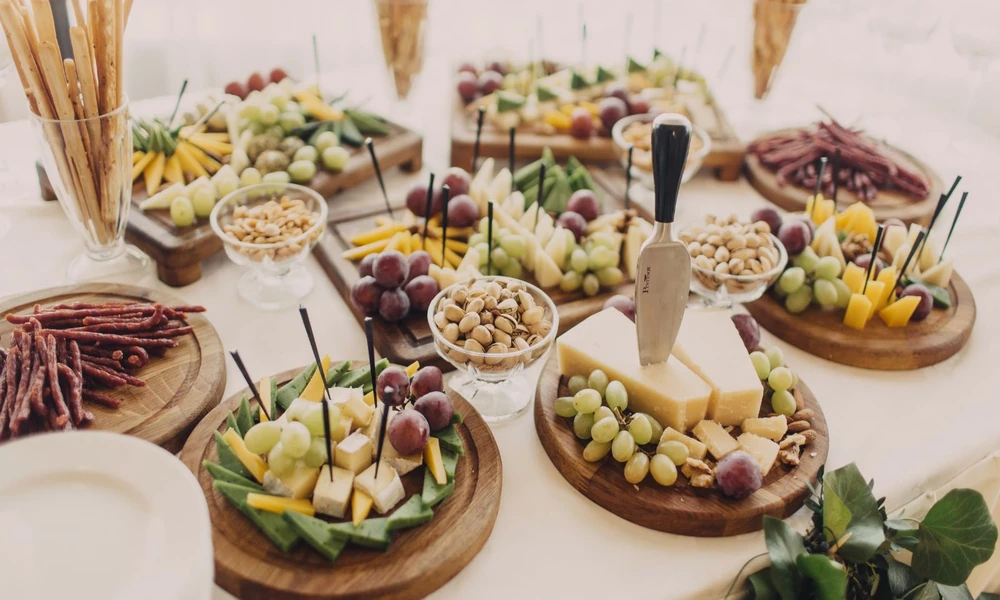
You can host supper without finding another piece of furniture to hold the food. Start with individual plates, decide what will be served together and bring additional food out in deliberate rounds. The room then needs comfortable places to eat and a clear route from the kitchen, rather than a separate surface large enough for the entire menu.
This changes the menu question. Instead of asking how many dishes you can display, ask what each guest needs in front of them at one time. A pierogi supper offers a useful example: a chosen filling, a vegetable accompaniment and an optional finish can arrive as a plate, with further servings offered when people are ready.
Use individual plates as the organizing idea
Begin by placing the plates where guests will eat. Check whether each person also has room for a glass, utensils and ordinary movement. The arrangement may reveal that a large platter would interrupt conversation or require someone to pass food over another person’s drink. That is a reason to plate in the kitchen, not to squeeze harder.
Choose a menu that tolerates this style of service. A main food and one accompaniment are easier to arrange than several dishes that all need separate bowls and serving tools. This does not mean every guest must receive an identical plate. It means you know which decisions need to be made before the food leaves the kitchen.
Ask about preferences before cooking. If you are offering a cheddar filling and a chicken filling, learn who wants which, and whether anyone has dietary requirements that need closer attention. Making that choice at the table while holding hot plates creates unnecessary confusion. A quiet conversation in advance gives you a clearer picture of the serving task.
Use a plate that suits the meal rather than the largest one you own. It should hold the food comfortably without crowding the place setting. Avoid building towering portions to compensate for the absence of a buffet. A first serving can be modest, with more available through an organized second round.
Bring out only what belongs in the current serving round
The kitchen can support the meal without becoming a permanent display. Set aside a clear area for assembling the current plates and another suitable place for used equipment. The purpose is to keep the path between preparation and service understandable. You should not need to move a decorative bowl each time a plate is ready.
Work from actual preparation directions. Frozen, uncooked dumplings need to be cooked according to their package, and the method you choose must suit the equipment you have. Do not base the evening on an assumed quick cooking time or on the idea that every variety can be prepared the same way.
Think through how many plates you can serve comfortably before promising a complicated menu. If preparing several fillings would overwhelm your available equipment, reduce the choices or simplify the accompaniments. Having fewer components ready in a sensible sequence is preferable to making a guest’s plate wait while you finish an unrelated task.
A second serving should be an intentional part of the plan, including appropriate handling of food while it waits. Do not leave a large reserve sitting out simply because guests might want more. Follow relevant food-safety guidance for the foods and service conditions involved, and keep the amount brought to the table proportionate to what is being served.
Give each filling a visible identity
Individual plates remove the need for a large display, but they do not remove the need to tell people what they are eating. Describe the filling plainly as you serve it. “Potato and cheddar” is useful information. A playful product name alone may mean little to a guest who has never seen the package.
When planning the choices, a local host can use Holy Perogy’s Raleigh store finder alongside its product descriptions to investigate the particular fillings intended for supper. Cheeky Chicken Bites are mini chicken-and-onion dumplings; Poppin’ Cheddar Bites contain potato and cheddar. These are different selections, even though both come in a mini format.
Keep the packaging available if someone needs ingredient information. A verbal description of the main filling is not a substitute for the current label. This is especially relevant if you offer a pork-containing variety, a cheese variety or a plant-based option and guests have requirements that go beyond casual preference.
Do not rely on where a dumpling happens to sit on the plate as its only identification. A guest may turn the plate, share a serving or forget your explanation. If mixed fillings would make the meal ambiguous, serve one clearly described variety per plate or offer them in separate rounds. Simplicity here helps the person eating make an informed choice.
Clear one course before introducing another
A room without a buffet surface benefits from a clear change between stages of the meal. If dessert is planned, finish supper and clear its plates before bringing dessert items into the room. Setting everything out early can consume the very space that made individual service appealing.
The same principle applies to optional additions during supper. Bring a requested condiment when it is useful rather than setting every bottle on the table in advance. Keep water easy to reach and preserve space for ordinary conversation. Guests should be able to put down a fork or lean back without negotiating a collection of serving dishes.
Allow the evening to have a pause. Clearing plates is not a failure of hospitality, and a short break can give everyone time to settle before another course. If a guest offers to help, give them one clear task that fits the room, such as collecting empty plates, instead of having several people converge on a narrow kitchen entrance.
The successful arrangement may look almost ordinary once supper is underway: people seated comfortably, food clearly identified and enough open space to eat. That is the point. Your dining table can do its own job without being asked to become the buffet table as well.