
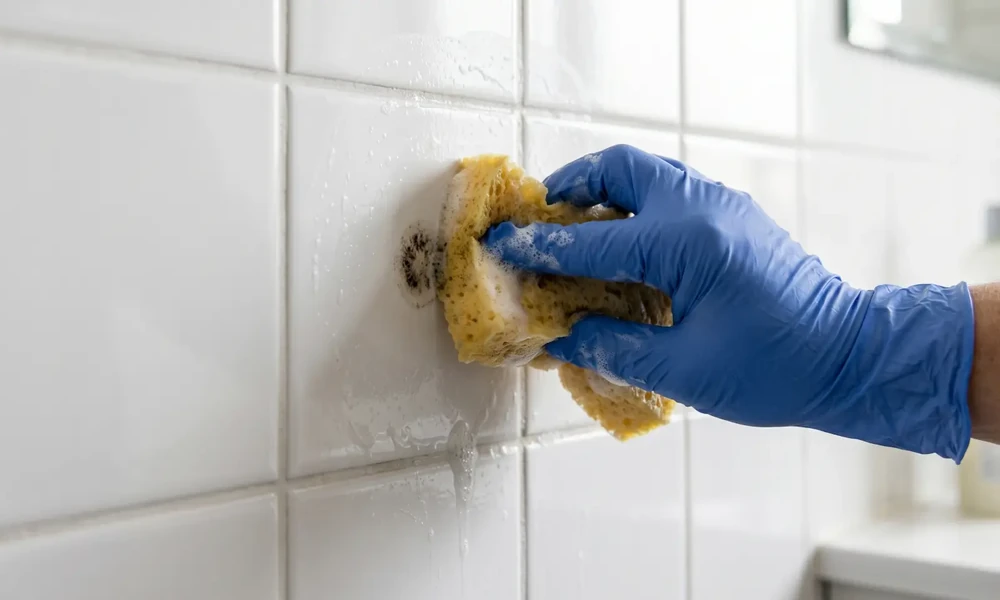
It usually starts with a spray bottle. Someone notices a gray bloom creeping along the bottom of a basement wall in April, scrubs it with diluted bleach and enjoys the sight of a clean surface. By August the same shadow is back, sometimes a little wider than before. That return visit is not bad luck. It is the mold showing you that the scrubbing only reached the part you could see.
Homeowners who want an honest look at what is going on behind a stain like that often call on mold remediation in Des Moines from a family business that has served central Iowa for over 35 years. The team at bakermoldremoval.com, led by Matt Baker, handles certified mold inspections along with certified removal in attics, crawlspaces and living areas, and they recommend air sample testing afterward to confirm the job held. That last step is exactly the piece a quick wipe leaves out.
What the Sponge Never Reaches
Mold is not a stain. It is a living fungus, and the fuzzy patch you see is only its fruiting surface. Beneath it, thin root-like threads called hyphae work their way into anything porous, such as the paper face of drywall, ceiling tiles, carpet padding and the softer grain of a wall stud. Meanwhile the colony releases spores so small that a single disturbed patch can seed a whole room.
Bleach makes this worse in a sneaky way. The chlorine stays near the surface and lightens the color, while the water in the solution soaks deeper into drywall or wood and gives the hidden growth a fresh drink. Even mold that has been killed still carries allergens, so dead growth left in place can keep bothering a sensitive family member. Real cleanup means removing the contamination physically and then drying the material so it cannot return.
Iowa Weather Keeps Paying Mold’s Water Bill
Central Iowa runs moisture into houses from several directions over the course of a year, which is why mold here rarely shows up as a one time event.
Summer brings sticky air, with dew points that often climb into the upper 60s and 70s. Basement walls stay cool against the soil, and when that humid air touches them, condensation forms on concrete, behind stored boxes and under carpet laid straight on the slab.
Winter flips the problem upward. Warm, damp air from showers, cooking and breathing rises into the attic, where it meets roof sheathing chilled by subzero nights. Frost builds on the underside of the decking, then melts during a February thaw and drips onto insulation. Bathroom fans that dump straight into the attic rather than outdoors make this much worse, and it is one of the most common causes inspectors find in area homes.
Spring adds groundwater. Snowmelt and heavy rain saturate the clay-heavy soils around many foundations, pushing water through cracks and overwhelming tired sump pumps. Neighborhoods near the Des Moines and Raccoon rivers also remember the floods of 1993 and 2008, and some older homes still carry hidden damage in framing that was never fully dried.
When Size Changes the Answer
Federal guidance draws a practical line at roughly 10 square feet, about a three foot by three foot patch. Below that, on a hard surface like tile or sealed concrete, a careful homeowner wearing gloves, eye protection and an N95 mask can usually scrub with detergent and water, then dry the area completely.
Several situations push a job beyond that point even when the visible patch looks small. Growth inside wall cavities, ductwork or attic insulation is hard to reach without spreading spores. Water from a sewer backup or river flooding carries bacteria along with mold risk. A musty smell with no visible source usually means growth is hiding somewhere. And homes with infants, older adults or anyone with asthma deserve more caution than a weekend scrub.
Inside a Job Done Properly
A thorough remediation starts with finding the water, not the mold. Inspectors use moisture meters to map damp areas, borescopes to look inside walls through small holes, and particle counters to gauge what is floating in the air. Once the source is clear, the work area is sealed with plastic sheeting and negative air machines with HEPA filters, which pull air outward so spores do not drift into clean rooms.
What happens next depends on the material.
- Drywall, insulation, carpet pad and ceiling tiles that are colonized usually get cut out, bagged and removed.
- Framing lumber and roof sheathing are typically saved, cleaned by sanding, wire brushing or media blasting, then HEPA vacuumed.
- Concrete and block walls are scrubbed, vacuumed and can be sealed once dry.
- Furniture, books and stored items are judged one by one, since some clean up well and others are not worth the effort.
Most reputable crews follow the IICRC S520 standard, the industry’s consensus procedure for professional mold remediation, which was updated in its fourth edition in 2024. One detail homeowners rarely know is that the standard treats correcting the underlying moisture cause as the property owner’s responsibility unless that repair is written into the contract. So it pays to ask, before work begins, exactly who is fixing the leak, the vent or the drainage problem.
Attics Follow Their Own Rules
Attic mold tends to go unnoticed for years because few people climb up there without a reason. The damage is slow but costly. Constant moisture softens roof sheathing until spots flex underfoot on the roof, and left long enough, rot can spread to trusses. At that stage, replacing decking means replacing the roof, which costs far more than cleaning the sheathing early.
The usual suspects are bath fans vented into the attic, blocked soffit vents where insulation was blown over them, an imbalance between intake and exhaust ventilation, and thin insulation that lets warm air leak upward. Growth often shows first on the north-facing slope, which stays coldest and dries slowest. After cleaning, some homeowners choose a sealant coating on the sheathing. It is not required, though it adds a layer of protection while the ventilation fixes take effect.
Proof Should Arrive Before the Final Invoice
A finished job should be measurable rather than just tidy. Moisture readings should return to normal for each material, surfaces should show no visible growth or dust, and air samples taken inside should compare reasonably with an outdoor sample collected the same day. Some homeowners hire a separate tester for this step so the person grading the work is not the same person who did it.
Iowa does not run a state licensing program for mold contractors, which means certifications, insurance, references and a written scope carry real weight when choosing who does the work. A detailed estimate that names the moisture source, the areas to be contained and the materials to be removed tells you far more than a flat price on a single line.
Keeping the Comeback From Happening
Once the house is clean, prevention is mostly about humidity. A cheap hygrometer will tell you whether your basement stays between 30 and 50 percent, and a dehumidifier running through July and August usually keeps it there. Gutters that drain several feet from the foundation, a sump pump tested each spring and bath fans that vent outdoors and run for 20 minutes after a shower handle most of the rest.
That spray bottle under the sink still has its uses. It just was never meant to do a job that starts with finding the water.