
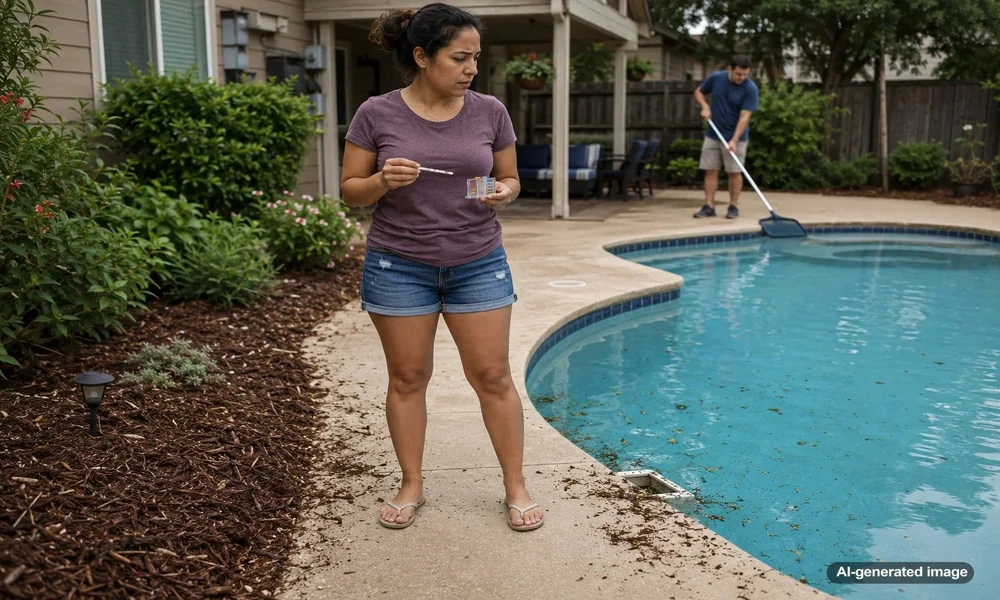
Pool water is never really still. Chlorine burns off in sunlight, pH drifts as rain and swimmers change the chemistry, and fine debris settles into the filter whether anyone is watching or not. In a northern Illinois summer, with July water often sitting near 80 degrees and afternoon storms rolling through, those changes speed up. The real cost of missed maintenance is rarely one bad week. It is the way small lapses stack on top of each other until a simple routine becomes a recovery project.
For homeowners who would rather never see that stack build up, Elgin pool maintenance through pollandpool.com keeps the routine on schedule from opening day to closing. A regular plan means problems get caught at the cheap stage instead of the expensive one. Set up service early in the season and the water starts summer balanced rather than catching up.
The First 48 Hours
A pool left alone for a weekend in July doesn’t look different on Monday morning, but the chemistry already does. Ultraviolet light breaks down unstabilized chlorine within hours, and a busy Saturday with several swimmers adds sweat, sunscreen and body oils that use up what remains. Free chlorine can fall below the level needed to keep germs and algae in check well before the water turns cloudy.
Circulation matters just as much in this window. If a timer was set too short or a skimmer basket filled with cottonwood fluff, the pump may have moved far less water than usual, leaving warm dead zones near steps and corners where algae gets its first foothold.
What it takes to recover: a water test, a chlorine adjustment and a clean basket. Ten minutes of work.
The First Week
By day five or six without testing or brushing, the slide becomes visible. The water loses its sparkle and takes on a faint haze. The walls feel slippery near the waterline, a sign that biofilm and early algae have started forming. If a thunderstorm passed through, rainwater has diluted the chlorine further and may have washed lawn fertilizer and phosphates into the pool, giving algae extra food.
pH drift adds its own trouble. When pH climbs above 7.8, chlorine works far more slowly, so even a fresh dose does less than expected. Calcium can begin to drop out of solution as a white crust along the tile line.
What it takes to recover: shocking the pool, a thorough brush and vacuum, a filter cleaning and a full rebalance. Usually a few hours of work and a day or two of running the pump continuously.
Two to Three Weeks
At this point the pool is often green, and the problem has moved from the water into the equipment. A filter trying to strain an algae bloom loads up quickly, pressure rises, and flow drops. A pump starved of water can overheat its seals and run noisy, and a heater pushing water through a scaled or clogged system loses efficiency.
Shocking a green pool safely takes more chlorine than most homeowners keep on hand, and handling large amounts of chemicals adds its own risk. Public health guidance on storing and handling pool chemicals safely is clear that chlorine products must never be mixed with acid, since the reaction can release toxic gas, and that water should never be added to the chemical. Rushed recovery work is exactly when those mistakes happen.
What it takes to recover: repeated shock treatments, several filter cleanings or a full media change, and close monitoring for a week or more before the water is safe to swim in again.
A Season or Longer
Neglect that stretches across a season leaves marks that cleaning cannot erase. Water that stays acidic etches plaster and fades vinyl, while water that stays high in pH and calcium leaves scale inside heaters and salt cells. Metal components corrode, and organic stains from leaves set into the surface. Pumps that labored against clogged filters for months often fail early.
In Elgin, the off season brings its own version of this stage. A winter cover that collects standing water and leaves can sag, tear or pull free, and that debris lands in the pool by spring. Plumbing that wasn’t blown out and protected before the first hard freeze can crack, turning a routine spring opening into a repair job.
What it takes to recover: equipment replacement, surface repair and in some cases a full drain and refill.
How Long the Hardware Lasts With and Without Care
| Component | Typical service life | Habit that stretches it | What neglect does |
|---|---|---|---|
| Pump motor | About 8 to 12 years | Clean baskets, steady water level | Overheating, worn seals, early failure |
| Cartridge filter element | About 2 to 4 years | Regular rinsing, rotating spares | Torn pleats, poor clarity, high pressure |
| Sand filter media | About 5 to 7 years | Timely backwashing | Channeling and cloudy water |
| Salt cell | About 3 to 7 years | Balanced pH and calcium | Scale buildup and lost output |
| Vinyl liner | About 7 to 12 years | Stable chemistry, proper water level | Fading, wrinkles, leaks |
| Gas heater | About 7 to 12 years | Clean flow and balanced water | Scaled heat exchanger, corrosion |
Maintenance as a Running Cost
The pattern across every stage is that the cost of catching up grows much faster than the cost of keeping up. Equipment choices can help close that gap. ENERGY STAR notes that certified variable speed and multi speed pool pumps filter more effectively at lower speeds, run quieter and tend to last longer than single speed models, which makes longer daily run times practical without the electric bill that once came with them. Pair steady circulation with regular testing and a cleaning routine, and most pools never get past the first 48 hours of trouble. For a northern Illinois pool that sees only a few months of swimming each year, that steady approach keeps those months focused on the water instead of on fixing it.